
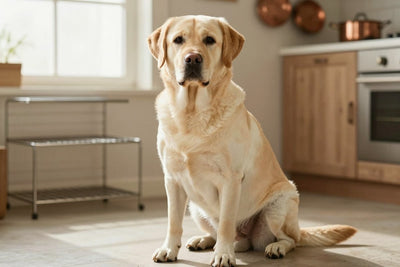
A yellow Labrador Retriever sitting on the floor of a bright, sunny kitchen
Breed Encyclopedia

Labrador Retriever

The Lab is the friendly, outgoing retriever many Americans picture as the family dog, built for cold-water work with an otter-like tail and a water-resistant coat. Labs need plenty of daily exercise, and their famous love of food means every treat should be counted.
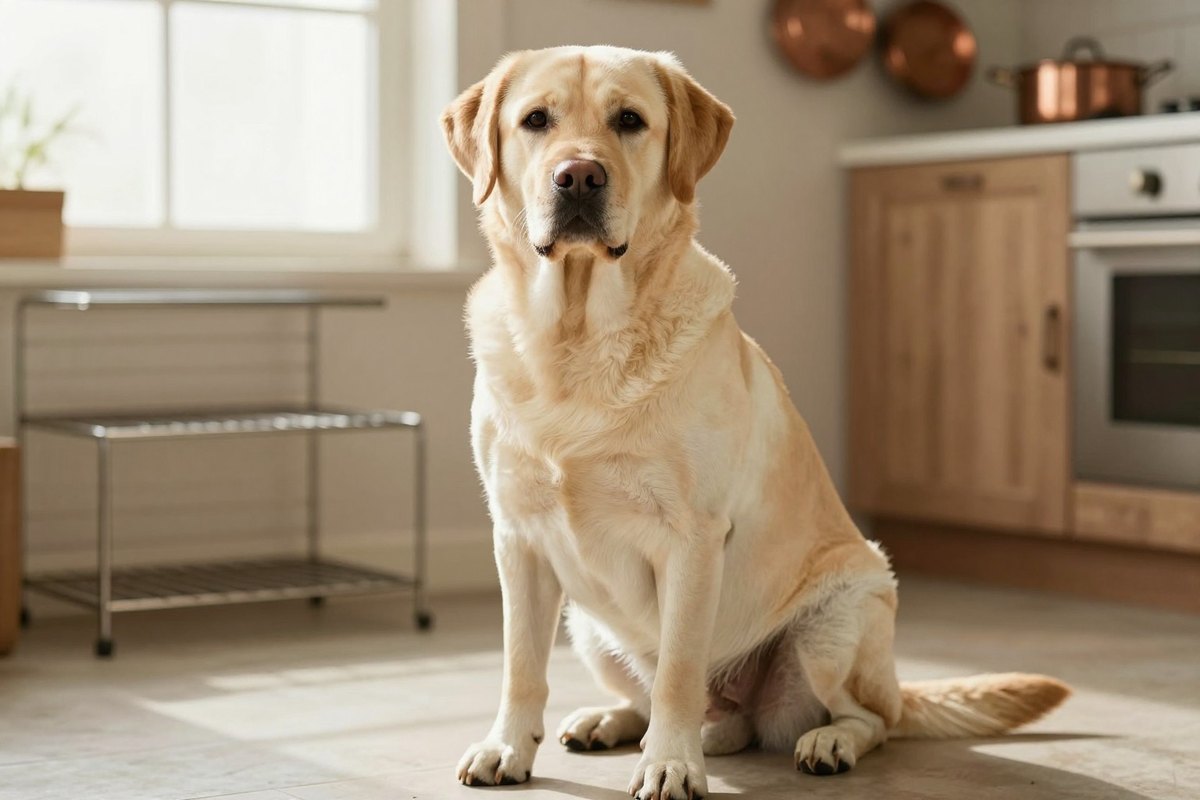
A yellow Labrador Retriever sitting on the floor of a bright, sunny kitchen

  • SizeLarge
  • AKC groupSporting Group
  • HeightMales 22.5-24.5 in, females 21.5-23.5 in
  • WeightMales 65-80 lb, females 55-70 lb
  • Life expectancy11-13 years
Part A

About the Labrador Retriever

Origin and purpose

Labs come from Newfoundland, Canada, where their ancestor, the St. John's dog, helped fishermen haul nets and fetch fish. English and Scottish nobles refined the breed in the 1800s into a gun dog for retrieving ducks and other game. (AKC breed history; AKC breed facts)

AKC places the Labrador Retriever in the Sporting Group, and it ranked No. 2 in AKC's 2025 popularity rankings. (AKC Sporting Group; AKC 2025 rankings)

Coat and energy

The coat is short, straight and very dense, with a soft, weather-resistant undercoat, and it comes in black, yellow or chocolate. (AKC breed standard)

Energy is high, so plan on plenty of exercise every day. (AKC breed guide)

Nutrition and weight

In working condition, males weigh 65-80 lb and females 55-70 lb. Males stand 22.5-24.5 inches and females 21.5-23.5 inches. (AKC breed standard)

In UK veterinary records, overweight and obesity was one of the three most common diagnoses in Labs (8.8% in one year), and neutered males were obese more often than intact males (11.4% vs 4.1%). (McGreevy et al. 2018)

Appetite is partly genetic. About one in four Labs (23%) is thought to carry a POMC gene variant linked to stronger food motivation, and each copy was tied to about 1.9 kg (about 4 lb) of extra body weight on average. (University of Cambridge)

Staying lean pays off. In a lifelong study of 48 Labs, dogs fed 25% less than their paired partner lived significantly longer and showed clinical signs of chronic disease later. (JAVMA 2002 study)

Lab puppies are large-breed puppies. AAFCO uses an expected adult weight of 70 lb or more as its large-breed cutoff (some experts prefer 50 lb), and Tufts nutritionists warn that extra calories from food and treats speed growth and raise the risk of bone and joint problems. (Tufts large-breed guide; Tufts growth guide)

Health watch

AKC puts typical life expectancy at 11-13 years. (AKC breed guide)

  • Overweight and obesity: carrying excess body fat. Labs appear to be at increased risk, and a POMC gene variant common in the breed is linked to higher weight and food drive. Treats are a major source of extra calories. Cambridge researchers note that food is often used as a training reward and urge owners of food-driven Labs to manage weight actively. (McGreevy et al. 2018; University of Cambridge)
  • Elbow dysplasia and osteochondritis dissecans (OCD): developmental problems in which parts of the elbow, or the joint cartilage of the shoulder, elbow or hock, form abnormally, leading to lameness and arthritis. Merck lists the Lab among the breeds with the highest odds, and UK records found degenerative joint disease in 5.5% of Labs in one year. Extra calories during growth speed growth and raise joint risk in large-breed puppies, so go easy on treats for growing Labs. Keeping adults lean was also linked to later onset of chronic disease in a lifelong Lab feeding study. (Merck (joint table); McGreevy et al. 2018; Tufts growth guide; JAVMA 2002 study)
  • Cranial cruciate ligament injury: a tear of a key knee ligament. Merck lists the Lab among the breeds with the highest odds, linked to the angle of the top surface of the shin bone (tibial plateau). No specific treat link is known. (Merck (joint table))
  • Outer ear inflammation (otitis externa): inflammation of the outer ear canal. It was the most common diagnosis in UK Labs (10.4% in one year), and among Labs with a recorded coat color it was more common in chocolate Labs (23.4%) than in black (12.8%) or yellow (17.0%) Labs. No specific treat link is known. (McGreevy et al. 2018)

Fun fact

A Lab's thick "otter tail" works like a rudder when it swims, and its webbed feet help it paddle fast. (AKC breed facts)

Part B

Baking, treats and ingredients

Breed-specific baking notes

  • Expect serious begging, since many Labs carry a gene variant tied to food drive. Pre-portion treats, break them small and count them as part of the day's food so they stay under about 10% of daily calories. (University of Cambridge; Tufts growth guide)
  • Go light on rich pastry. In a lifelong feeding study, Labs fed 25% less lived significantly longer, so a lean, low-butter treat is the kinder choice for this breed. (JAVMA 2002 study)

General baking notes for all dogs

  • Keep bakes lean. The Merck Veterinary Manual names eating large amounts of table scraps or other inappropriate food as a commonly suspected risk factor for pancreatitis, and the ASPCA warns that high-fat nuts can cause vomiting, diarrhea and possibly pancreatitis. Butter-rich pastry and nut-heavy fillings are poor choices for dogs. (Merck (pancreatitis); ASPCA)
  • For large-breed puppies (under about 12 months), keep treats minimal. Tufts veterinary nutritionists explain that extra calories from treats and other foods speed growth and raise the risk of lifelong bone and joint problems in large breeds, and they advise keeping all treats under 10% of daily calories. (Tufts growth guide)
  • Leave xylitol (found in some baked goods, candy and gum), chocolate and cocoa, coffee or tea (caffeine), grapes and raisins, macadamia nuts and raw yeast dough out of every dog bake. If a dog eats any of these, contact your veterinarian or the ASPCA Animal Poison Control Center right away. (ASPCA)
  • Be honest about extracts: under the U.S. standard of identity, vanilla extract must contain at least 35% alcohol by volume, and the ASPCA lists alcohol as dangerous for pets. Read extract labels and leave alcohol-based extracts out of dog treats. (21 CFR 169.175; ASPCA)

Daily calories and treat budget

A typical neutered adult at 55-80 lb needs roughly 1,250-1,656 kcal a day (RER x 1.6, Merck Veterinary Manual), so treats should stay under about 125-166 kcal a day (the 10% guideline). Intact, very active, young, senior or overweight dogs differ, so ask your veterinarian for your dog's number.

Check an ingredient before you bake, and see our guide to treat portions and the 10% guideline.

Treat size: A typical neutered adult Lab should get no more than about 125-166 kcal a day from treats (10% of roughly 1,250-1,656 kcal).

Ask your veterinarian about

  • Overweight and obesity
  • Elbow dysplasia and osteochondritis dissecans (OCD)
  • Cranial cruciate ligament injury
  • Outer ear inflammation (otitis externa)

Breed tendencies don't mean your dog has a condition. Your veterinarian knows your dog.

Ingredients to know

Sources

  1. Breed page (height, weight, life expectancy), American Kennel Club. Checked October 22, 2026.
  2. Labrador Retriever History: From Water Dogs to Beloved Companions, American Kennel Club. Checked October 22, 2026.
  3. Facts About the Labrador Retriever That You May Not Know, American Kennel Club. Checked October 22, 2026.
  4. Get to Know the Retriever Breeds of the Sporting Group, American Kennel Club. Checked October 22, 2026.
  5. Most Popular Dog Breeds of 2025, American Kennel Club. Checked October 22, 2026.
  6. Official Standard for the Labrador Retriever, American Kennel Club. Checked October 22, 2026.
  7. Is the Labrador Retriever the Right Dog Breed for You?, American Kennel Club. Checked October 22, 2026.
  8. Labrador retrievers under primary veterinary care in the UK: demography, mortality and disorders, Canine Genetics and Epidemiology (McGreevy et al., 2018); Royal Veterinary College repository copy. Checked October 22, 2026.
  9. Genetic variant may help explain why Labradors are prone to obesity, University of Cambridge. Checked October 22, 2026.
  10. Effects of diet restriction on life span and age-related changes in dogs, Journal of the American Veterinary Medical Association, 2002 (PubMed record). Checked October 22, 2026.
  11. Confused About What to Feed Your Large Breed Puppy? New Rules May Help!, Tufts University Cummings School of Veterinary Medicine (Petfoodology). Checked October 22, 2026.
  12. Growth Guide: Keeping your Puppy on the Right Track, Tufts University Cummings School of Veterinary Medicine (Petfoodology). Checked October 22, 2026.
  13. Table: Heritable Conformational Conditions Resulting in Canine Osteoarthritis, Merck Veterinary Manual. Checked October 22, 2026.
  14. Pancreatitis and Other Disorders of the Pancreas in Dogs, Merck Veterinary Manual. Checked October 22, 2026.
  15. People Foods to Avoid Feeding Your Pets, ASPCA Animal Poison Control Center. Checked October 22, 2026.
  16. 21 CFR 169.175 -- Vanilla extract., U.S. Food and Drug Administration regulation, published in the Electronic Code of Federal Regulations (eCFR). Checked October 22, 2026.

Last checked against these sources: October 22, 2026.

Written by VanillaGoods from the cited sources. Not reviewed by a veterinarian. Not a substitute for veterinary advice.