Should You Store Matcha in the Fridge After Opening?

Yes, you should store matcha in the fridge after opening. Refrigeration slows the oxidation and degradation that dull matcha's bright green color, grassy flavor, and beneficial catechins, especially once the sealed package is exposed to air and light. This applies whether you're whisking ceremonial-grade powder for tea or blending culinary matcha into lattes and smoothies.
Key takeaways
- Cold storage at 4°C (40°F) significantly extends the shelf life of opened matcha by slowing catechin breakdown and preserving color and flavor.
- Always use an airtight, opaque container inside the fridge to shield the powder from moisture, light, and strong food odors.
- Allow the sealed container to reach room temperature before opening it to prevent condensation from ruining the powder.
- Unopened matcha can also be refrigerated or frozen for long-term storage, but once opened, refrigeration is your best bet for everyday use.
Yes, refrigerate opened matcha to preserve freshness
Cold storage is the single most effective way to keep opened matcha vibrant. Research shows that sealed matcha held at 4°C kept its catechins, antioxidant activity, and color better than matcha held at warmer temperatures over a two-month test, according to a 2020 study published in Food Science and Biotechnology. The fridge slows the enzymatic and oxidative reactions that turn bright emerald powder into a dull, brownish-yellow mess. If you've invested in quality matcha, refrigeration pays off.
Why matcha degrades faster than other teas
Matcha is uniquely vulnerable because it's ground into a fine powder with massive surface area exposed to air, light, and heat. Whole-leaf teas like sencha or hojicha degrade too, but their rolled or twisted leaves offer some protection. Matcha has none of that. Once you break the factory seal, oxygen begins oxidizing the catechins and chlorophyll that give matcha its flavor and color. Light accelerates the process further. According to a 2024 study, gallated catechins in matcha exhibited half-lives of approximately 30–40 days under light exposure during storage, and storage under low water activity and light-shielded conditions significantly improved retention of bioactive compounds. Heat compounds the damage by speeding every chemical reaction. A pantry shelf at 70°F (21°C) will age your matcha weeks faster than a refrigerator at 40°F (4°C).
That's why the fridge matters. It doesn't stop degradation completely, but it buys you time. If you drink matcha daily, that extra month or two of peak flavor is worth the small effort of proper cold storage.
How to store matcha in the fridge correctly
Refrigeration only works if you protect the powder from moisture and odors. Follow these steps every time you open a new tin or bag:
- Transfer the matcha into a small, airtight container. Glass jars with silicone-sealed lids or metal tins with tight-fitting tops work well. Make sure the container is opaque or store it inside a zip-top bag to block light.
- Press out as much air as possible before sealing. Less air means less oxidation.
- Place the sealed container in the main body of the fridge, not the door. Door shelves experience temperature swings every time you open the appliance.
- Before opening the container for your morning latte, let it sit on the counter for 10–15 minutes. This brings the powder to room temperature and prevents condensation from forming inside when you break the seal. Moisture is matcha's enemy; even a few droplets will clump the powder and accelerate spoilage.
- Scoop out what you need, reseal immediately, and return the container to the fridge.
If your fridge is crowded with pungent foods like onions, garlic, or strong cheeses, consider a dedicated airtight box or a second sealed bag around your matcha container. Matcha powder is absorbent and will pick up neighboring flavors surprisingly fast.
What about freezing matcha?
Freezing works beautifully for unopened, factory-sealed matcha that you want to stockpile for months. Research on green tea catechins shows that catechin degradation can be effectively mitigated if green tea is stored at a temperature between −20 °C and −80 °C, according to a 2022 study. Commercial producers in Japan often freeze tencha (the shade-grown leaf used to make matcha) and ground matcha to preserve quality before shipping.
For home use, though, freezing opened matcha introduces risk. Every time you pull the container out to scoop powder, you expose it to a temperature swing and potential condensation. If you do freeze, commit to thawing the entire container once, portioning it into smaller jars for the fridge, and not re-freezing. The fridge strikes the best balance between preservation and practicality for everyday drinking.
Common mistakes that ruin refrigerated matcha
Even with cold storage, a few missteps can undo your efforts. The most common is opening a cold container too quickly. When you pull a jar straight from the fridge and pop the lid, warm kitchen air meets the cold powder and condenses into moisture. Within a week, you'll see clumps and off flavors. Always let the sealed container warm up first.
Another mistake is using a container that isn't truly airtight. A loose-fitting lid or a jar with a worn gasket lets in air and odors. Test your container by pressing the lid firmly and feeling for resistance. If air escapes easily, find a better seal.
Finally, some people store matcha in clear glass jars on a refrigerator shelf under the interior light. Light exposure continues to degrade catechins even at cold temperatures, so wrap clear containers in foil or use opaque tins from the start.
How long does refrigerated matcha stay fresh?
Opened matcha stored properly in the fridge will hold its vibrant color, grassy aroma, and smooth flavor for about one to two months. After that, you'll notice the green fading to olive or yellow, a flat or stale taste, and a loss of the creamy, umami sweetness that marks high-quality powder. It won't make you sick, but it won't taste the way it should.
Unopened matcha, still in its factory-sealed pouch or tin, lasts much longer in the fridge or freezer. Many producers print a best-by date 12–18 months out, and cold storage can extend that by several more months. Once you break the seal, though, the clock speeds up. If you're deciding between ceremonial and culinary grades, remember that ceremonial matcha's delicate flavor is more sensitive to storage conditions. Refrigeration is non-negotiable if you want to taste what you paid for.
For context, other loose-leaf teas also benefit from cool, dark storage, though whole leaves degrade more slowly than powder. You can read more about general tea shelf life in our guide on whether loose-leaf tea expires.
Refrigerated matcha for lattes and baking
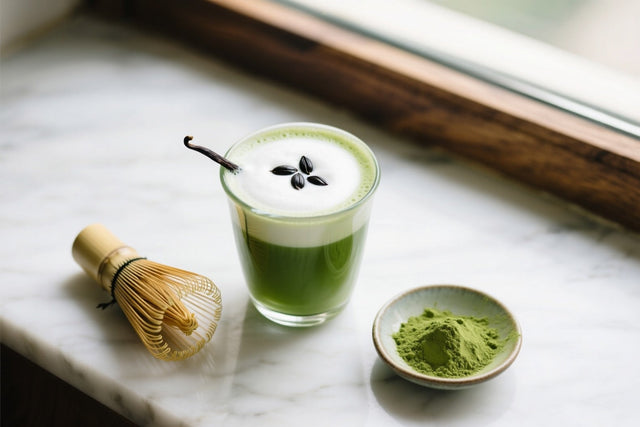
If you're blending matcha into a vanilla matcha latte or folding it into cake batter, you might wonder whether storage precision matters as much. It does. Even culinary-grade matcha loses its bright color and vegetal sweetness when stored poorly, and a latte made with stale powder tastes flat and bitter. Refrigeration keeps your culinary matcha tasting fresh enough to shine through milk, vanilla, and sweetener.
The same cold-storage principles apply to other tea and spice powders. Similar to storing vanilla beans in a cool, dark place to preserve their aromatic compounds, matcha needs protection from heat, light, and air to maintain its character.
Pro tips for matcha storage
Buy matcha in smaller quantities that you'll finish within a month or two. A 30-gram tin is more practical than a 100-gram bag if you only whisk a bowl or two each week. Smaller packages mean less time between opening and finishing, so the powder spends less time exposed to air.
Label your container with the date you opened it. Matcha changes slowly enough that it's easy to forget when you started a tin, and a simple sticky note prevents you from drinking stale powder without realizing it.
If you're traveling or keeping matcha at the office, a small insulated lunch bag with a reusable ice pack can mimic fridge conditions for a few hours. It's not a long-term solution, but it's better than leaving an opened tin in a hot car or on a sunny desk.
Why VanillaGoods matcha pairs with proper storage
Our Matcha Green Tea Powder is sourced from premium Japanese tea gardens and arrives vibrant green, ready to whisk into traditional tea or blend into lattes and smoothies. Because we care about quality from origin to cup, we package it in resealable, light-blocking pouches to help preserve freshness. Once you open it, transferring the powder to an airtight container and refrigerating it ensures you'll taste the full spectrum of umami, sweetness, and vegetal brightness in every serving. Pair it with our Madagascar vanilla extract for a latte that balances earthy green tea with warm, floral vanilla, and you'll understand why proper storage makes all the difference.
Frequently asked questions
Can I leave matcha out on the counter if I use it every day?
You can, but you'll sacrifice freshness. Even daily use means the powder sits exposed to room temperature, light, and air for 23 hours a day, accelerating oxidation. If you drink matcha every morning, keeping it in the fridge and warming the container before opening takes an extra two minutes and extends peak flavor by weeks. The trade-off is worth it.
Does refrigeration change the taste of matcha?
No, cold storage itself doesn't alter the flavor. It preserves the taste by slowing degradation. The only risk is picking up fridge odors if the container isn't airtight, so seal it well and store it away from strong-smelling foods. Done right, refrigerated matcha tastes exactly as it should.
How can I tell if my matcha has gone bad?
Look for a dull, yellowish color instead of vibrant green, a flat or musty aroma instead of fresh grass, and a bitter or stale taste when whisked. Matcha doesn't spoil in a food-safety sense, but it loses the qualities that make it enjoyable. If it doesn't smell and taste right, it's time to replace it.
Should I refrigerate matcha before opening the package?
Yes, especially if you won't use it immediately. Factory-sealed matcha benefits from cold or frozen storage for long-term preservation. Just let the sealed package come to room temperature before you open it for the first time to avoid condensation.
Can I store other teas in the fridge the same way?
You can, though whole-leaf teas like sencha, hojicha, or jasmine green benefit less dramatically because their lower surface area makes them less vulnerable. Refrigeration still helps, particularly for delicate green teas, but it's not as critical as it is for powdered matcha. Use the same airtight, odor-proof containers and the same warm-up step before opening.
Proper storage turns a tin of matcha into weeks of vibrant, flavorful tea instead of a faded powder you'll toss half-finished. Keep it cold, keep it sealed, and let it warm before you scoop. Your morning bowl will thank you. Explore our full selection of premium matcha and start every day with the bright, grassy flavor that only fresh powder can deliver.
Sources
- How to Store Matcha (So It Stays Green), Leaf and Temple (citing Food Science and Biotechnology, Springer, 2020)
- Effect of water activity and light exposure on the stability of bioactive compounds in matcha powder during storage periods, ScienceDirect (2024)
- Rapid assessment of green tea storage quality using copper-amino acid nanozyme sensor arrays, PMC (PubMed Central) (2022)