Rooibos tea is a naturally caffeine-free herbal infusion harvested from a single shrub native to South Africa's Cederberg mountains. Unlike black or green tea, rooibos doesn't come from the Camellia sinensis plant; it's made from the needle-like leaves of Aspalathus linearis, a legume that grows nowhere else in the world. The fermented version turns a distinctive rust-red and carries a sweet, earthy flavor with no bitterness, while the unoxidized green variety tastes grassier and lighter.
Key takeaways
- Rooibos is naturally caffeine-free because the plant doesn't produce caffeine at all.
- The Cederberg region of South Africa produces roughly 15,000 tons annually, with exports passing 10,930 tonnes in 2025.
- Traditional red rooibos is oxidized after cutting; green rooibos is steamed to halt oxidation.
- Japan buys about one-third of global rooibos exports, valuing its clean flavor and health appeal.
- The industry supports around 8,000 workers and shares benefits with the San and Khoi communities who first used the plant.
Rooibos at a glance
| Plant | Flavor notes | Harvest season | Processing style | Share of world herbal-tea supply |
|---|---|---|---|---|
| Aspalathus linearis (not Camellia sinensis) | Sweet, woody, honey, vanilla; mild and smooth | Summer (December–March) | Cut, bruise, oxidize (red) or steam-halt (green) | Niche but growing; dominant caffeine-free red-tea alternative |
Where and how rooibos grows
Rooibos grows in the Cederberg region of South Africa's Western Cape, about three hours north of Cape Town. The plant thrives in acidic, sandy soils and a Mediterranean climate with winter rainfall between 200 mm and 400 mm per year, according to Klipopmekaar production data. The elevation ranges from low valleys to mountain slopes, and daytime heat alternates with cool nights. No other place on Earth has successfully cultivated commercial rooibos; attempts in other countries failed to replicate the flavor or yield.
Farmers plant seeds in nursery beds, transplant seedlings after about 18 months, and harvest the bushes annually once they mature at around 18 to 24 months. The plants are cut by hand or machine during the summer months, typically December through March. Most rooibos comes from small to medium-sized family farms rather than massive estates, and the cooperative model is common. Production in 2025 was estimated at approximately 15,000 tons, down from 17,000 tons in 2023, according to the South African Rooibos Council, reflecting climate pressures and water variability in the region.
Processing tradition and why it changes the flavor
Red rooibos gets its color and characteristic flavor from oxidation, a process similar in principle to what happens with black tea but applied to a completely different plant. After cutting, the fine needle-like leaves and stems are bruised or crushed, then moistened and left in heaps to ferment (oxidize) in the sun for several hours. Enzymes in the plant tissue react with oxygen, turning the green plant material a deep reddish-brown and developing sweet, woody, honeyed notes. The oxidized rooibos is then dried and graded by length and color.
Green rooibos skips oxidation. Freshly cut leaves are steamed immediately to deactivate the enzymes, halting the browning reaction. The result is a lighter, grassier, more astringent cup that retains more of the plant's original polyphenol content. Green rooibos is less common and commands a slightly higher price, but red rooibos remains the traditional and most popular form worldwide. Both types contain zero caffeine naturally because Aspalathus linearis doesn't produce the compound at all, unlike tea plants or coffee. If you're comparing caffeine-free options, rooibos offers a genuine alternative without chemical decaffeination, unlike the methods used for decaf tea made from Camellia sinensis.
Flavor profile and best uses
Red rooibos brews a bright amber-to-crimson cup with a naturally sweet, mellow flavor. You'll taste honey, vanilla, almond, and a woody warmth that feels comforting without astringency or bitterness. Because there's no caffeine and very low tannin, rooibos can steep for long periods without turning harsh, making it forgiving for beginners and ideal for iced tea. Green rooibos is lighter, more herbaceous, with a grassy edge and subtler sweetness.
| Use | Why it works | Pairing ideas |
|---|---|---|
| Hot or iced daily drinking | Caffeine-free, naturally sweet, no bitterness | Honey, milk, lemon, vanilla |
| Evening or bedtime tea | Zero caffeine won't interfere with sleep | Chamomile, ginger, cinnamon |
| Blending base | Mild flavor supports spices and fruit | Apple, cinnamon, citrus peel, vanilla beans |
| Latte or tea latte | Smooth, sweet body stands up to milk | Steamed milk, honey, cardamom |
Rooibos pairs especially well with vanilla. A split vanilla bean steeped alongside rooibos deepens the honeyed sweetness and adds a creamy aroma that complements the natural woody notes. You can also use rooibos in baking: steep it in milk or cream for custards, panna cotta, or cake batter. It's gentler than black tea but more flavorful than many herbal infusions, giving you a middle path when you want tea character without caffeine or tannin.
History and people behind rooibos
The San and Khoi peoples of the Cederberg have used rooibos for generations, harvesting wild plants and brewing the leaves as a daily beverage and traditional remedy. Dutch settlers learned about rooibos in the early 18th century, and by the early 20th century a Russian immigrant botanist named Benjamin Ginsberg began marketing it commercially as a caffeine-free tea alternative. He applied techniques borrowed from black tea processing to oxidize the leaves, creating the red version that became the standard.
Cultivation expanded slowly through the mid-1900s, and the industry remained regionally focused until the 1990s, when global interest in herbal and wellness beverages brought rooibos to international markets. Exports grew from approximately 5,900 tonnes in 2015 to 9,700 tonnes in 2024, and in 2025 surpassed 10,930 tonnes, according to Farmer's Weekly reporting. Japan became the largest export market, accounting for 33% of shipments in 2025, per South African Rooibos Council data.
In May 2021, rooibos became the first African food to receive Protected Designation of Origin status in the European Union, according to the 2024 Rooibos Industry Information Sheet. This legal protection ensures that only tea grown and processed in the designated Cederberg zone can carry the rooibos name in EU markets, much like Champagne or Darjeeling. The industry also established a benefit-sharing agreement with the San and Khoi councils; between 2019 and 2024, R42.7 million was distributed through this mechanism, recognizing the indigenous knowledge that underpins the crop. The rooibos industry provides income and employment to approximately 8,000 workers in primary production, supporting rural livelihoods in a region with few other commercial crops.
How to buy rooibos
Rooibos is graded primarily by cut length and purity. Long-cut or whole-leaf rooibos consists of longer needle pieces and yields a cleaner, more refined cup. Short-cut or "dust" grades are common in teabags and blends; they steep faster but can taste a bit flat. Look for bright, uniform color: deep rust-red for traditional rooibos, greenish-tan for the unoxidized type. Avoid dull, brownish batches, which may be stale.
Freshness matters less dramatically than with delicate first-flush Darjeeling, but rooibos does fade over time. Buy from a supplier with good turnover and store it in an airtight container away from light and moisture. Rooibos has a shelf life of about one to two years when stored properly; for more on tea longevity, see our guide on whether loose-leaf tea expires. Organic and fair-trade certifications are increasingly common and signal attention to farming practices and labor conditions.
Common mistakes and pro tips
Don't under-steep rooibos. Because it has no caffeine and very low tannin, you can't really over-brew it. Five to seven minutes is standard, but leaving the leaves in for ten or even twenty minutes just makes the cup richer and sweeter. Use boiling water; rooibos isn't delicate like green tea. A typical ratio is one to two teaspoons per eight-ounce cup, but adjust to taste.
If you're serving rooibos iced, cold-brew it overnight for a smoother, naturally sweet result. Combine rooibos with a little honey and a vanilla bean for a simple homemade "red cappuccino" or latte. And if you're experimenting with blends, pair rooibos with warming spices like cinnamon, ginger, or cardamom rather than bright citrus, which can overwhelm its gentle character.
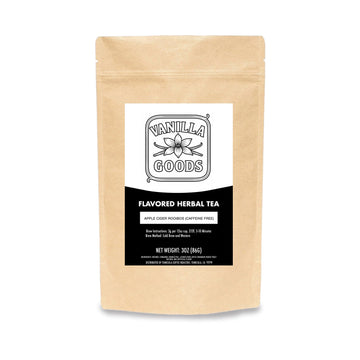
Rooibos shines in blends that lean sweet and spiced. Our Apple Cider Rooibos Tea combines South African red rooibos with cinnamon, apple, and warming spices for a naturally caffeine-free cup that tastes like autumn in a mug. It steeps smooth and sweet with no bitterness, perfect for evenings or anytime you want comforting flavor without caffeine. Pair it with one of our Madagascar vanilla beans split into the brew for an extra layer of creamy sweetness.
Frequently asked questions
Is rooibos tea actually tea?
Not botanically. True tea comes from Camellia sinensis, the tea plant that gives us black, green, white, and oolong varieties. Rooibos comes from Aspalathus linearis, a shrub in the legume family native to South Africa. It's an herbal infusion, but the tea industry and consumers commonly call it rooibos tea because it's brewed and enjoyed the same way.
Does rooibos have any caffeine at all?
No. Rooibos contains zero caffeine naturally because the Aspalathus linearis plant doesn't produce the compound, according to Acıbadem International health reporting. This makes it fundamentally different from decaffeinated black or green tea, which starts with caffeine and has most (but not all) removed. Rooibos is safe for children, pregnant women, and anyone avoiding stimulants.
What's the difference between red and green rooibos?
Red rooibos is oxidized after harvest, turning the leaves rust-red and developing sweet, honeyed, woody flavors. Green rooibos is steamed immediately to halt oxidation, preserving a lighter, grassier taste and more of the original polyphenols. Both are caffeine-free and come from the same plant; the difference is purely in processing, much like the contrast between black and green tea from Camellia sinensis.
Can I steep rooibos multiple times?
You can, but rooibos gives up most of its flavor in the first steep. A second infusion will be lighter and thinner, unlike robust oolongs or pu-erh that can go four or five rounds. If you like a mild cup, a second steep works fine; just extend the time. For everyday drinking, most people use fresh leaves each time.
Why is rooibos only grown in South Africa?
Rooibos evolved in the unique soils and climate of the Cederberg mountains, and the plant has proven nearly impossible to cultivate elsewhere at commercial scale. Attempts in other Mediterranean climates failed to produce the same yield, flavor, or plant health. The combination of sandy acidic soil, specific rainfall patterns, and altitude creates conditions that haven't been replicated outside the Western Cape, making rooibos one of the world's most geographically limited crops.
Rooibos offers a window into a single South African region, a plant that grows nowhere else, and a caffeine-free cup that's both comforting and versatile. Whether you're stocking a cafe menu, exploring herbal alternatives, or just curious about the red bush, rooibos delivers flavor, history, and a tradition worth knowing. Browse our full selection of loose-leaf teas and herbal blends in the Tea Journal to discover more origin stories and brewing guides.
Sources
- Rooibos exports keeping the industry going, Farmer's Weekly (2025)
- As Exports Grow Rooibos Maintains Course Amid Climate And Trade Pressures, South African Rooibos Council (2025)
- The Untapped Value of Rooibos to SA's Economy, Klipopmekaar / South African Rooibos Council (2025)
- ROOIBOS INDUSTRY INFORMATION SHEET 2024, South African Rooibos Council (2024)
- Rooibos Farming & Production Process, Klipopmekaar (current)
- Rooibos Tea: The Caffeine-Free Red Cup, Reviewed, Acıbadem International (current)