Candy Making Temperatures Without the Stress

Candy making temperatures are the specific heat ranges that turn sugar syrup into fudge, caramel, toffee, or brittle. Each stage (soft-ball, firm-ball, hard-ball, soft-crack, and hard-crack) corresponds to a precise temperature and sugar concentration that determines the final texture of your candy.
Key takeaways
- Candy stages range from soft-ball (234-240°F, 85% sugar) to hard-crack (300-310°F, 99% sugar), according to Mississippi State University Extension data.
- Sugar syrup heats slowly until 220°F, then climbs rapidly through the candy stages.
- Altitude matters: reduce target temperature by 2°F for every 1,000 feet above sea level, per Colorado State University Extension.
- A cold-water test confirms doneness when you don't have a thermometer or want to double-check accuracy.
- Most candy failures trace to stopping too early, stirring at the wrong time, or skipping altitude adjustment.
The short answer
Candy making temperatures tell you when sugar syrup has reached the right concentration for your recipe. As water evaporates, the syrup gets hotter and the sugar becomes more concentrated, changing the texture from soft and pliable to hard and brittle. Hit the right temperature, and you get perfect fudge or toffee. Miss it by even 5°F, and you'll end up with grainy fudge or chewy brittle.
Why temperature determines candy texture
Sugar dissolved in water creates a syrup that boils hotter than plain water. As the mixture heats, water evaporates and the sugar concentration rises. The higher the concentration, the hotter the syrup and the firmer the candy once it cools. At soft-ball stage (234-240°F), the syrup is about 85% sugar and makes pliable fudge or fondant. By the time you reach hard-crack stage (300-310°F), the syrup is 99% sugar and sets into glass-like brittles and lollipops.
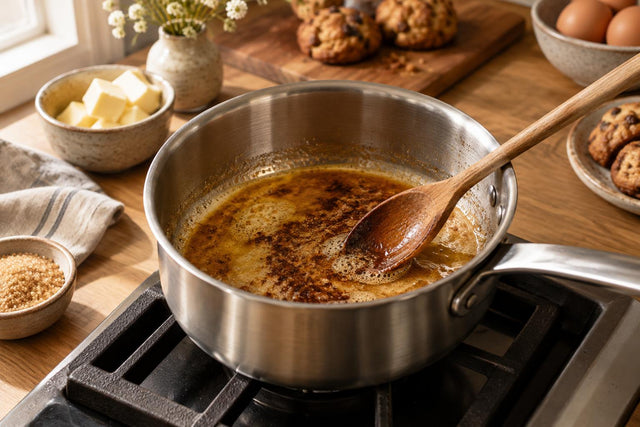
The syrup heats slowly at first. According to Illinois State Board of Education research, sugar syrup rises very slowly until it reaches 220°F. After that, the temperature climbs fast, so you need to watch closely. A few degrees can shift you from one stage to the next, which is why a good thermometer matters.
The six candy stages and what to make with each
| Stage | Temperature | Sugar % | Cold-Water Test | Uses |
|---|---|---|---|---|
| Thread | 230-234°F (110-112°C) | Concentrated syrup | Forms a loose thread | Syrups, glacé fruit |
| Soft-ball | 234-240°F (112-116°C) | 85% | Flattens when removed | Fudge, fondant, pralines |
| Firm-ball | 245-250°F (118-121°C) | 87% | Holds shape but pliable | Soft caramels, nougat |
| Hard-ball | 250-265°F (121-130°C) | 92% | Holds shape, still sticky | Firm caramels, divinity, marshmallows |
| Soft-crack | 270-290°F (132-143°C) | 95% | Separates into threads, pliable | Taffy, butterscotch |
| Hard-crack | 300-310°F (149-154°C) | 99% | Brittle threads that snap | Toffee, peanut brittle, lollipops |
How to hit the right temperature every time
A reliable candy thermometer is your most important tool. Look for one that reads from 100-400°F and clips to the side of your pan, keeping the tip submerged in the syrup but not touching the bottom. Here's the step-by-step method that works.
- Combine sugar, water, and any other ingredients (corn syrup, butter, cream) in a heavy-bottomed saucepan. The heavy base distributes heat evenly and prevents scorching.
- Heat over medium, stirring gently until the sugar dissolves completely. You should feel no grit when you rub a spoon against the pan bottom.
- Once the sugar dissolves, stop stirring. Clip your thermometer to the pan so the bulb sits in the syrup without touching the bottom.
- Let the syrup boil without stirring. Stirring at this stage can cause sugar crystals to form, turning your smooth candy grainy.
- Watch the thermometer closely after 220°F. The temperature will accelerate, and it's easy to overshoot your target.
- Remove the pan from heat as soon as you hit your target temperature. The syrup will continue cooking from residual heat, so act fast.
- If you're at high elevation, subtract 2°F for every 1,000 feet above sea level. At 5,000 feet, a recipe calling for 240°F should stop at 230°F.
For a double-check or if you don't have a thermometer, use the cold-water test. Drop a small spoonful of hot syrup into a glass of ice water, wait a few seconds, then feel the texture. Soft-ball syrup will form a squishy ball that flattens when you remove it. Hard-crack syrup will form brittle threads that snap cleanly.
Adjusting for altitude
Altitude changes the boiling point of water, which shifts every candy stage downward. According to Colorado State University Extension, you should decrease your target temperature by 2°F for every 1,000 feet above sea level. At 10,000 feet, a recipe calling for 236°F would finish at 216°F instead. If you're not sure of your elevation, the cold-water test becomes especially useful as a backup.
Run the numbers
The Candy Temperature & Sugar Stage Calculator adjusts target temperatures for your altitude automatically and shows you exactly what texture to expect at each stage. It's free, and it takes the guesswork out of high-elevation candy making. For batch sizing or scaling a caramel recipe, the Caramel Batch Size Calculator handles the math while you focus on temperature.
Common mistakes and how to avoid them
The biggest mistake is stirring after the sugar dissolves. Once your syrup starts boiling, leave it alone. Stirring introduces agitation that can cause crystals to form, and those crystals spread through the batch, turning smooth candy into grainy sugar. If crystals do form on the side of the pan, brush them down with a wet pastry brush.
Second most common: pulling the pan too early. Candy that doesn't reach full temperature will be too soft or won't set at all. A 5°F difference can mean the gap between fudge that slices cleanly and fudge that never firms up. Trust your thermometer, and if you're nervous, confirm with the cold-water test.
Finally, don't forget altitude. If you live above 3,000 feet and follow a sea-level recipe without adjustment, your candy will turn out too hard because you're overcooking the sugar. The fix is simple: subtract 2°F per 1,000 feet and test your first batch.
A recipe to practice on
Classic vanilla fudge is the ideal beginner candy. It targets soft-ball stage (234-240°F), which gives you a forgiving range, and the flavor is straightforward enough that you'll know immediately if the texture is right. Combine 2 cups (400 g) sugar, ¾ cup (180 ml) whole milk, 2 tablespoons (28 g) butter, and a pinch of salt in a heavy saucepan. Heat to 236°F (or your altitude-adjusted target), remove from heat, and stir in 1 teaspoon pure vanilla extract. Beat until the fudge thickens and loses its gloss, then pour into a buttered pan. Once you can make smooth, sliceable fudge, you'll have the confidence to tackle hard-crack brittles and chewy caramels.
You'll find hundreds more candy and confection recipes in the VanillaGoods recipe library, each tested and scaled for home kitchens.
Where vanilla comes in
Vanilla goes into candy after you remove the pan from heat. High temperatures can drive off the delicate aromatics that make vanilla worth using, so stir in your extract, paste, or scraped bean seeds once the syrup is off the burner. For fudge, fondant, caramels, and pralines, 1 to 2 teaspoons of pure extract per batch is standard. In hard-crack candies like toffee or brittle, vanilla adds a warm background note that balances the caramelized sugar. If you want a more complex vanilla profile in caramels, try vanilla paste, which adds flecks of bean and a richer flavor that holds up to butter and cream.
Pure extract made from quality beans delivers consistent, clean flavor without the alcoholic bite of imitation vanilla, which can taste sharp in simple sugar confections. For candy making, reach for a single-origin Madagascar extract. Its creamy, sweet profile complements caramel and chocolate without competing.
Frequently asked questions
Can I make candy without a thermometer?
Yes, but it takes practice. Use the cold-water test: drop a small spoonful of syrup into ice water and check the texture. Soft-ball will form a squishy ball, hard-ball will hold its shape but remain pliable, and hard-crack will form brittle threads that snap. The cold-water test is reliable once you know what to feel for, but a thermometer removes the guesswork and is worth the small investment.
Why did my fudge turn out grainy?
Grainy fudge usually means sugar crystals formed during cooking or beating. Stirring the syrup after the sugar dissolves is the most common cause. Once your mixture starts boiling, don't stir until it's off the heat and cooled slightly. Crystals can also form if even a few grains of undissolved sugar remain at the start, so make sure the sugar is fully dissolved before you stop stirring.
What's the best candy thermometer for beginners?
Look for a thermometer that reads from 100-400°F, has a clip to attach to your pan, and positions the bulb so it sits in the syrup without touching the bottom of the pan. Digital instant-read thermometers work, but a traditional glass or dial candy thermometer with a clip is easier to monitor hands-free while the syrup boils.
How do I know if my thermometer is accurate?
Test it in boiling water. At sea level, water boils at 212°F. If your thermometer reads higher or lower, note the difference and adjust your candy targets accordingly. For example, if your thermometer reads 214°F in boiling water, add 2°F to every recipe target. Re-test your thermometer every few months or if you drop it.
Can I fix candy that didn't reach the right temperature?
If you catch it immediately, you can return the pan to the heat and bring it up to temperature. If the candy has already cooled and set, it's harder. Undercooked fudge that's too soft can sometimes be reheated with a splash of water, brought back to temperature, and re-set. Overcooked candy that's too hard can't be fixed, but it can often be crushed and used as a topping or mix-in.
Make candy with confidence
Once you understand how candy making temperatures work, you'll stop second-guessing every batch. The science is straightforward: control the temperature, and you control the texture. For candy that depends on clean, creamy vanilla flavor, reach for Madagascar Vanilla Beans, Grade A. You can scrape the seeds directly into caramel or make your own extract that's miles better than anything on a grocery shelf. Check out the free Baking Academy for step-by-step video courses, or explore the rest of the Baking Science & Technique library for more how-to guides that take the mystery out of baking.
Sources
- Experiments in Food Science Laboratory Manual, Mississippi State University Extension (current)
- Candy Making at High Elevation, Colorado State University Extension (current)
- Sugar Crystallization Unit: Culinary Science Problem Area: Food Science, Illinois State Board of Education (current)