

Tahitian Vanilla: Why It's a Different Species (And Why It Matters)
When you read that Tahitian vanilla is "different" from Madagascar vanilla, that's not marketing language. The difference is genuinely biological. Madagascar, Mexican, Indonesian, and Ugandan vanilla all come from the same plant species — Vanilla planifolia. Tahitian vanilla comes from a different species entirely — Vanilla tahitensis. The chemistry is different, the flavor is different, the genetics are different. This species difference is why Tahitian vanilla tastes the way it does, why it's expensive, and why it's not interchangeable with other origins.
This article explains the species story — where Tahitian vanilla came from, how it became distinct, what makes it taste so different, and how to use it well. By the end, you'll understand exactly why Tahitian vanilla deserves its own category in the vanilla world.
The Species Question
Botanists have classified hundreds of vanilla species in the wild, growing across tropical regions worldwide. Most produce inedible or weakly aromatic pods. Only three species are commercially significant for flavor:
• Vanilla planifolia: the dominant commercial species. Native to Mexico. Now grown in Madagascar, Indonesia, Uganda, India, and elsewhere.
• Vanilla tahitensis: the Tahitian species. Grown only in Tahiti, French Polynesia, and Papua New Guinea (where it's sometimes called PNG Tahitian-style).
• Vanilla pompona: a third species, sometimes called "West Indian vanilla" or "vanillon." Limited commercial use, mostly in the Caribbean and South America. Less aromatic than the other two.
The first two account for essentially all premium-quality vanilla globally. Within that, V. planifolia accounts for roughly 95% of total supply. V. tahitensis accounts for the remaining 5% — but its distinctive flavor makes it disproportionately important for specialty applications.
How Did V. tahitensis Come to Exist?
This is one of the more interesting puzzles in vanilla botanical history. The species story is still partly debated, but the most widely accepted version goes like this:
In the early 1800s, vanilla cuttings were transported from Mexico to the Philippines via Spanish colonial trade routes. From the Philippines, French Admiral Hamelin reportedly carried cuttings to Tahiti in 1848 — making Tahiti one of the later Pacific destinations to receive vanilla. The plants were initially V. planifolia, the same species cultivated everywhere else.
But something unusual happened. Within a few generations, the Tahitian plants developed distinctive characteristics — different leaf shape, different flower morphology, different pod chemistry. The plants in Tahiti seemed to be evolving away from the original V. planifolia stock.
Modern genetic analysis suggests V. tahitensis is most likely a hybrid — possibly between V. planifolia and another vanilla species (V. odorata is one suspected parent) that had cross-pollinated either accidentally or naturally during the plant's transit through multiple environments. Whether this hybridization happened in Mexico, the Philippines, or Tahiti is debated. But the result is a plant distinct enough that botanists classify it as its own species.
Whether V. tahitensis is technically a separate species or a stable hybrid is a question that genuinely interests botanists. For practical purposes, what matters is that Tahitian vanilla is genetically and chemically different from other commercial vanillas in ways that produce a noticeably different flavor and aroma.
The Chemistry of Tahitian Vanilla
The species-level difference shows up clearly in the chemistry of cured pods. Tahitian and Madagascar vanilla differ in several important compounds:
Vanillin (the primary flavor compound)
• Madagascar V. planifolia: 1.8–2.2% by weight in cured pods (high)
• Tahitian V. tahitensis: 1.0–1.5% by weight (low)
This is a significant difference. Vanillin is the compound most people identify as "vanilla" — the dominant aromatic in commercial vanilla extracts. Tahitian vanilla has much less of it. This is part of why Tahitian vanilla doesn't taste like "classic vanilla" to most people.
Anisic compounds
• Madagascar V. planifolia: trace amounts
• Tahitian V. tahitensis: significant amounts of anisaldehyde, p-cresol, and related compounds
These compounds give Tahitian vanilla its distinctive floral, almost licorice-like character. Anisaldehyde in particular contributes the cherry-floral note that's hallmark Tahitian. These compounds are present in Madagascar vanilla too, but at much lower concentrations — too low to dominate the flavor.
Heliotropin and related compounds
• Tahitian vanilla is notably high in heliotropin (piperonal), which contributes a sweet, almost cherry-floral aroma similar to certain perfume ingredients. Madagascar vanilla has very little of this compound.
Hydroxybenzaldehydes
• Tahitian vanilla contains higher proportions of certain hydroxybenzaldehydes that contribute fruity character. These aren't the dominant compounds but they shape the overall profile.
The result is a fundamentally different aromatic profile. Where Madagascar vanilla is dominated by vanillin (producing the "classic vanilla" smell), Tahitian vanilla is more complex, with multiple compounds contributing nearly equally to a profile that smells distinctly different — floral, fruity, slightly perfumed, less straightforwardly "vanilla."
How Tahitian Vanilla Looks Different
The species difference shows up visually too. If you have a Madagascar bean and a Tahitian bean side by side, you'll notice:
Pod shape
• Madagascar pods: relatively long (5–8 inches typical), thin, often slightly curved
• Tahitian pods: shorter (4–7 inches typical), plumper, more rounded, with a distinctly thicker appearance
Color
• Madagascar pods: dark brown to nearly black, often with an oily-looking surface
• Tahitian pods: typically lighter brown, sometimes with a slightly reddish undertone, more matte appearance
Texture
• Madagascar pods: oily, supple, leathery, very fragrant
• Tahitian pods: similar in texture but slightly less oily, with a different fragrance signature
Flowers (when growing)
V. tahitensis flowers are also distinguishable from V. planifolia flowers. Different size, slightly different morphology, different bloom patterns. This is one of the morphological differences that originally led botanists to classify the two as separate species.
Where Tahitian Vanilla Grows
Commercial Tahitian vanilla cultivation is concentrated in two regions:
French Polynesia (especially the Society Islands)
The original commercial Tahitian vanilla comes from Tahiti and surrounding islands in French Polynesia. The Tahitian government has tried to protect the appellation "Tahitian vanilla" through various certification schemes. Authentic Tahitian-origin vanilla typically commands the highest prices.
Production is small. The total annual cured vanilla output from Tahiti and French Polynesia is approximately 30–50 metric tons — tiny compared to Madagascar's thousands of tons. The volume has been declining in recent decades as Tahitian agriculture faces labor shortages and competition from tourism.
Papua New Guinea
PNG produces both V. planifolia and V. tahitensis. The PNG Tahitian-style vanilla is typically less expensive than Tahitian-origin product but offers similar flavor profile. Volumes from PNG are larger than Tahiti itself — perhaps 100+ metric tons annually — and growing as new plantations are established.
Note that PNG Tahitian-style vanilla is genuine V. tahitensis (the same species), not just "Tahiti-style flavored." The plants are direct descendants of cuttings from Tahiti. The flavor is comparable. Some buyers strongly prefer Tahiti-origin for authenticity reasons; others find PNG product equally good or even superior in some batches.
Other regions
Small experimental plantings of V. tahitensis exist in Hawaii, Costa Rica, and a few other locations. None has reached commercial scale. Most specialty Tahitian vanilla available in markets comes from French Polynesia or PNG.
Why Tahitian Vanilla Is Expensive
Several factors push Tahitian vanilla prices typically 2–4x Madagascar prices:
Limited supply
Combined annual V. tahitensis production is well under 200 metric tons. Compare this to Madagascar's 1,500–3,000 metric tons of V. planifolia. Tahitian is fundamentally a small-volume crop competing for premium positioning.
Higher labor costs
French Polynesia is a high-cost region by tropical agriculture standards. Labor in Tahitian vanilla production is more expensive than in Madagascar or Indonesia. PNG production is somewhat cheaper but still more expensive than the dominant origins.
Distinctive product
Premium pricing reflects genuinely different product. Buyers who want the Tahitian flavor profile have no substitute — Madagascar vanilla cannot replicate it. This pricing power has been protected by the species difference.
Tourism competition
Tahitian agriculture competes with tourism for land and labor. As tourism has grown, agricultural workers have shifted to higher-paying tourism jobs. This has driven up costs and constrained supply expansion.
Regulatory protection
Various French and French Polynesian regulations protect Tahitian vanilla as a specialty product, similar to how French wine appellations work. These regulations limit who can produce "Tahitian vanilla" but also support premium pricing.
How to Use Tahitian Vanilla Well
Tahitian vanilla isn't a substitute for Madagascar vanilla — it's a different ingredient with different ideal applications. Some specific uses where it shines:
Stone fruit pairings
Tahitian vanilla's natural cherry-floral character pairs beautifully with peaches, cherries, apricots, and plums. A vanilla bean steeped in cream for a peach panna cotta produces something Madagascar vanilla can't match. Same for cherry compotes, apricot tarts, and plum jams.
Tropical fruit applications
Pineapple, mango, passion fruit, and coconut all pair beautifully with Tahitian vanilla. The floral notes integrate with tropical fruit aromatics in ways that produce surprisingly complex flavors.
White chocolate and delicate desserts
White chocolate's mild flavor profile lets Tahitian vanilla shine. Madagascar vanilla can dominate white chocolate; Tahitian vanilla complements it. Same principle applies to other delicate cream-based desserts where Madagascar's robust profile would overwhelm.
Cocktails and aromatic infusions
Tahitian vanilla's perfumed character works beautifully in cocktails — particularly with light spirits, fruit-forward drinks, and tropical cocktails. It also makes exceptional vanilla-infused vodka or rum.
Showcase desserts
Where vanilla is the star and there's nothing for it to compete with, Tahitian's complexity shows up most. A simple vanilla mousse made with Tahitian vanilla can be revelatory.
Pastry and baking
In delicate pastry — French macarons, sablés, financiers, madeleines — Tahitian vanilla's floral character adds sophistication. In assertive American baking (chocolate chip cookies, brownies), Madagascar's classic profile usually serves better.
When NOT to Use Tahitian Vanilla
Tahitian vanilla is wonderful for many applications but wrong for others:
Chocolate desserts
Tahitian vanilla's floral notes clash with chocolate's deep, slightly bitter profile. The result tastes muddled rather than complementary. Use Madagascar (or even Mexican) for any chocolate-forward dessert.
Coffee-flavored desserts
Same principle — coffee's deep roasted notes don't pair well with Tahitian's perfumed character. Madagascar vanilla complements coffee much better.
Anywhere classic vanilla is expected
If you're making vanilla ice cream for someone whose mental image of vanilla ice cream is the classic American/French style, Tahitian will taste "wrong" to them — not bad, but not what they expected. Madagascar is safer for that audience.
General-purpose homemade extract
Tahitian vanilla makes interesting extract, but it's expensive for a general-purpose ingredient. Reserve Tahitian beans for specific applications and use Madagascar for everyday extract.
How to Tell Authentic Tahitian Vanilla
Like many premium ingredients, Tahitian vanilla is sometimes adulterated or mislabeled. Tips for authentication:
• The smell test: real Tahitian vanilla has a distinctive cherry-floral aroma unlike anything else. Madagascar vanilla labeled as Tahitian will smell wrong to anyone who's experienced both.
• The bean shape: Tahitian beans are notably plumper and shorter than Madagascar beans. A long, thin bean labeled Tahitian is suspicious.
• Origin documentation: legitimate suppliers can document whether their Tahitian vanilla comes from French Polynesia or PNG.
• Price: genuine Tahitian vanilla rarely costs less than 2x Madagascar prices. Suspiciously cheap "Tahitian" vanilla may be Madagascar mislabeled.
The PNG Question
Should you pay extra for Tahiti-origin Tahitian vanilla, or is PNG-origin Tahitian-style vanilla equivalent?
Honest answer: at the bean level, PNG vanilla can be excellent. Some PNG producers consistently produce beans comparable to Tahitian-origin product. The species is the same. The chemistry is comparable. For most applications, PNG Tahitian-style vanilla offers excellent value.
However, the highest-quality individual beans from French Polynesia tend to exceed even premium PNG product. The best Tahiti-origin beans, from established farms, can have remarkable complexity that's harder to find consistently in PNG product.
For most home cooks, PNG Tahitian-style vanilla offers nearly all the flavor benefits of Tahiti-origin at substantially lower prices. For showcase applications where the absolute best is wanted, Tahiti-origin remains the premium choice.
VanillaGoods Final Thoughts...
Tahitian vanilla is genuinely a different product from Madagascar vanilla — not a marketing variation but a different species with different chemistry and different applications. Treating it as a substitute for Madagascar vanilla wastes its unique character; treating it as something distinctive opens up applications that Madagascar can't fill.
Once you've experienced authentic Tahitian vanilla in the right application — say, paired with peaches, or in a panna cotta, or as the featured note in a vanilla mousse — you understand why people pay the premium. It's not a more expensive version of the vanilla you know. It's a different thing entirely, deserving its own place in the kitchen.
Try the Difference
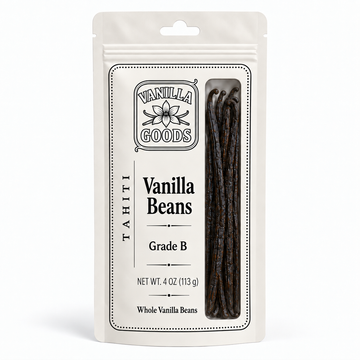
If you've only used Madagascar vanilla, Tahitian opens up a whole new flavor profile. Browse our vanilla beans collection for both classic and specialty origins.





Article Comments
0 commentsNo comments yet — be the first to share how this turned out for you.
Leave a comment