

The Chemistry of Vanilla Extract: What Happens in the Bottle
When you drop a split vanilla bean into a jar of vodka and wait six months, something genuinely fascinating happens. It's not magic, but it's not far off either. Hundreds of distinct flavor compounds — some delicate, some structural, some not even fully formed yet at the start — slowly migrate from solid bean material into liquid alcohol, transforming clear vodka into the deep amber substance we call pure vanilla extract.
This article explains the chemistry of that transformation in plain language. No advanced organic chemistry background needed. Just a curious mind and an interest in why exactly six months in a cabinet produces something a chemistry lab can't replicate by mixing isolated compounds. By the end, you'll understand vanilla extract on a level most people who use it every day never reach.
What's Inside a Vanilla Bean
Before we talk about extraction, let's understand the source. A cured vanilla bean is a chemical treasure — one of the most aromatic and complex natural materials on earth. Inside the dark, leathery exterior of a cured pod is a world of chemistry.
The bean's flavor compounds are concentrated in two main areas: the small black seeds (which look like specks of pepper) and the inner walls of the pod itself. These compounds developed during the months-long curing process, transformed from the colorless precursors that existed in the freshly harvested green pod.
Modern chemical analysis has identified more than 250 distinct volatile compounds in a single cured vanilla bean. The major categories include:
• Phenolic aldehydes (including vanillin, p-hydroxybenzaldehyde, anisaldehyde) — the dominant aroma compounds, responsible for the recognizable "vanilla" smell.
• Phenolic acids (vanillic acid, p-hydroxybenzoic acid) — contribute warmth and depth, less aromatic but flavor-active.
• Other phenols (eugenol, guaiacol) — bring spicy, smoky, and woody notes.
• Esters and acids — small contributions of fruity, tart, and complex notes.
• Various trace compounds — individually present in tiny quantities but collectively responsible for vanilla's unmistakable complexity.
Vanillin is the most abundant and famous of these compounds — typically 1–4% of a cured bean's weight. But focusing only on vanillin misses the point. Real vanilla flavor is what happens when all 250+ compounds work together at specific natural ratios.
The Solvent: Why Alcohol Works So Well
To extract these compounds, you need a solvent that can pull them out of the bean's cellular structure. Alcohol turns out to be remarkably well-suited to this job, and here's why.
Most of vanilla's flavor compounds are partly hydrophobic and partly hydrophilic — they have molecular structures that are partially "oil-like" and partially "water-like." Pure water can't dissolve them well; pure oil can't either. Alcohol, sitting between water and oil in its dissolving properties, hits a sweet spot that pulls the compounds into solution efficiently.
This is why the FDA's 35% ABV minimum exists. Below that concentration, alcohol becomes too "watery" to extract vanilla's hydrophobic compounds efficiently. At 35% and above, the alcohol-water mix can dissolve a wide range of vanilla compounds simultaneously.
Different alcohol concentrations actually extract different ratios of compounds:
• 35% ABV (vodka, basic spirits): balanced extraction across most flavor categories.
• 50–60% ABV (high-proof spirits): better extraction of more hydrophobic compounds, including some woody and resinous notes.
• 75%+ ABV (Everclear, neutral grain spirit): extracts almost everything, including some bitter compounds that lower-proof alcohol leaves behind. Often diluted after extraction.
The Extraction Process: A Slow Dance of Diffusion
When you drop a split vanilla bean into alcohol, three processes start simultaneously:
1. Wetting
Alcohol penetrates the bean's outer surface and starts hydrating the dried tissues inside. This takes hours to days. As the bean rehydrates, it becomes more permeable — alcohol can penetrate deeper into the cellular structure.
2. Dissolution
Inside the bean, flavor compounds dissolve into the alcohol that has penetrated the cells. Different compounds dissolve at different rates depending on their molecular structure and concentration. This dissolution continues for months.
3. Diffusion
Once compounds are dissolved in the alcohol inside the bean, they slowly move outward into the surrounding alcohol bath, driven by concentration gradients. Compounds move from areas of high concentration (inside the bean) to areas of low concentration (the surrounding liquid) until equilibrium is reached.
This entire process — wetting, dissolution, and diffusion — is what we call "extraction." The pace is set by the slowest step at any given moment, which varies as different compound categories mobilize.
Why Different Compounds Extract at Different Rates
This is the key insight that explains why aging time matters. Not all flavor compounds extract on the same timeline. Three factors determine extraction rate:
Molecular size
Smaller molecules diffuse faster than larger ones. Vanillin (molecular weight 152) is one of the smaller flavor compounds in vanilla, which is part of why it extracts quickly — most of it migrates into the alcohol within 4–6 weeks. Larger compounds like some of the polyphenols and certain aromatic complexes take much longer.
Polarity and solubility
Compounds that match alcohol's solubility profile extract faster than those that don't. Many of vanilla's most distinctive supporting compounds are slightly less soluble in alcohol-water mixtures than vanillin is, so they take longer to fully migrate.
Cell wall location
Compounds in the seed coat and inner pod wall extract faster than compounds bound deeper in the bean's structural tissues. Some compounds aren't fully released until the bean's cellular structure begins to break down further during extended aging.
The result of these three factors is a staged extraction profile:
• Weeks 1–4: rapid vanillin extraction, plus most water-soluble compounds (some pigments, simple acids).
• Weeks 4–12: secondary phenolic compounds and aromatic aldehydes extract.
• Months 3–6: deeper-bound compounds, including some of the wood-like and resinous notes.
• Months 6–12+: subtle finishing compounds and integration effects.
This is why a 2-week extract tastes harsh and one-dimensional, and a 6-month extract tastes layered and complex. The compounds don't all extract on the same timeline.
What Heat Does Differently
Heat dramatically accelerates extraction by increasing molecular motion. Higher temperatures mean molecules move faster and interact more frequently — and that means faster diffusion, faster dissolution, and faster extraction overall.
But heat doesn't just speed things up — it changes which compounds extract preferentially. At higher temperatures, smaller and more volatile compounds extract very efficiently while some larger, more delicate compounds are damaged or evaporate.
Specifically, heat:
• Massively accelerates vanillin extraction
• Increases evaporation of volatile aromatic compounds (potentially losing them entirely)
• Breaks down some delicate compounds, replacing them with cooked-flavor byproducts
• Skips the slow integration phase that gives cold extracts their character
This is why heat-extracted vanilla extract tastes flatter and less complex than cold-aged versions of the same beans. The extracted total may be similar, but the proportions are different — heavier on vanillin, lighter on supporting compounds, with some unique-to-heat off notes.
The Integration Phase: After Extraction Is Mostly Done
By month 3 of cold aging, most major flavor compounds have extracted. But the extract continues to improve through month 6 and beyond. What's happening?
This second phase is integration — chemical and physical interactions between the compounds already dissolved in the alcohol. Several effects contribute:
Acid-base equilibration
Phenolic acids and other acidic compounds gradually equilibrate with alcohol and water in the solution. This affects the apparent flavor profile because the perceived taste of acids depends on their dissociation state.
Esterification
Slow chemical reactions between alcohol and acids in the extract produce small amounts of fruity ester compounds. These contribute to the rounded, finished character of aged extract — and they don't form quickly.
Hydrogen bonding and molecular association
As compounds equilibrate at room temperature, weak intermolecular bonds (especially hydrogen bonds) reorganize. The flavor sensation depends on which molecules are presenting to your taste buds, and that presentation changes as the solution organizes itself.
Oxidative aging
Tiny amounts of oxygen dissolved in the extract slowly oxidize some compounds and produce others. In moderation, this contributes to the deepening character of aged extract. (Too much oxygen exposure is bad — which is why extract should be tightly sealed.)
The cumulative effect of these processes is that an extract at month 6 has not just more compounds than at month 2, but also a more integrated and rounded flavor profile of the compounds it contains. Time changes the same chemistry.
Why Imitation Vanilla Tastes Different
Now we can finally answer a question that confuses many bakers: why does synthetic vanillin (chemically identical to natural vanillin) taste so different from real vanilla extract?
The answer is in everything we just covered:
• Synthetic vanillin contains only one compound. Real vanilla extract contains 250+.
• Synthetic vanillin lacks all the supporting phenolic compounds, esters, and aromatic acids that round out vanilla's flavor.
• Synthetic vanillin in solution doesn't have the equilibration and integration effects that develop over months of aging.
• The interactions between vanilla's many compounds — what flavor scientists call "olfactory synergy" — produce perceived flavors that no individual compound generates alone.
In other words, real vanilla flavor is an emergent property of a complex system. You can't reproduce it by isolating the dominant compound. The richness comes from the orchestra, not the soloist.
The Role of the Bean Itself
One more chemistry detail worth knowing: the cured vanilla bean isn't just a passive source of compounds. It's also a biochemical workshop where slow reactions continue to produce new flavor compounds even after curing is technically complete.
Some research suggests that compounds in cured beans continue to be metabolized by residual enzymes for years after curing — meaning that a five-year-old vanilla bean has a different chemical profile than a fresh one. This is part of why long-aged extracts have such distinctive character: the beans themselves are evolving in the bottle.
This is also why "vanilla bean caviar" — the seeds scraped from the bean — are so prized. The seeds contain particularly high concentrations of certain compounds and are the most chemically active part of the bean.
The Practical Takeaway
Why does any of this matter for your homemade extract project? Because it explains why the standard advice you find online actually works:
• "Wait at least 8 weeks": by then, vanillin and most major aromatics have extracted. Below this timeline, the extract is incomplete and harsh.
• "6 months is the sweet spot": by then, most secondary compounds have extracted and significant integration has occurred. The extract is mature and rounded.
• "Store in a dark, cool place": light and heat both accelerate degradation reactions that destroy flavor compounds. Cool darkness preserves the slow positive reactions while suppressing the destructive ones.
• "Shake gently every week": agitation distributes alcohol evenly through the bean and renews concentration gradients that drive diffusion. Without it, extraction slows and becomes uneven.
• "Always submerge beans fully": oxygen exposure on uncovered bean tips drives degradative oxidation reactions and can support mold growth.
Every piece of standard extract-making advice has chemistry behind it. Understanding the chemistry helps you make better decisions when you're improvising — and it explains why the slow, careful method consistently produces better results than shortcuts.
VanillaGoods Final Thoughts...
Real vanilla extract is one of the most chemically interesting products in any kitchen. The slow migration of 250+ compounds from bean to alcohol over months — followed by the equally slow integration of those compounds into a unified flavor — is a process that happens nowhere else in a typical pantry.
This is also why mass-produced vanilla extract, even when it's technically pure, often disappoints. Industrial production cuts corners on time, on bean quality, on aging — and the chemistry doesn't allow for those corners to be cut without sacrificing complexity. The best vanilla extract is, by chemistry's own rules, slow vanilla extract.
Next time you uncap a bottle of well-aged vanilla extract, take a moment to inhale and recognize what you're smelling: hundreds of compounds at carefully balanced ratios, the result of months of slow molecular dance in a glass jar in a quiet cabinet. That's the chemistry of real vanilla.
Experience the Chemistry
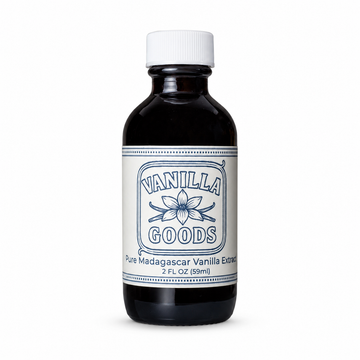
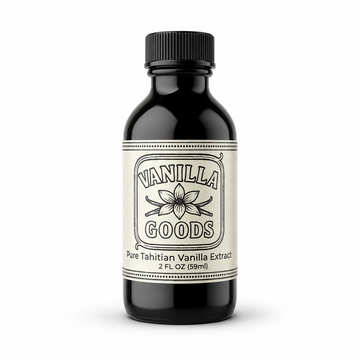
Ready to set the chemistry in motion? Our Grade B vanilla beans are flavor-dense and perfect for the slow method. Or pour from our pure vanilla extract — already aged through every stage described above.



Article Comments
0 commentsNo comments yet — be the first to share how this turned out for you.
Leave a comment